
'About Gender'-series

You can at any time return to the course summary page by clicking here.

This self-paced online module is part of ADPC’s “About Gender”-series, a collection of short web-based courses on key concepts of gender.

All courses in this series depart from a so-called gender transformative approach. Kindly take a few moments to examine the chart below which illustrates how all interventions are on the scale from having a negative effect on gender equality, to transforming unequal gender norms, values and structures.
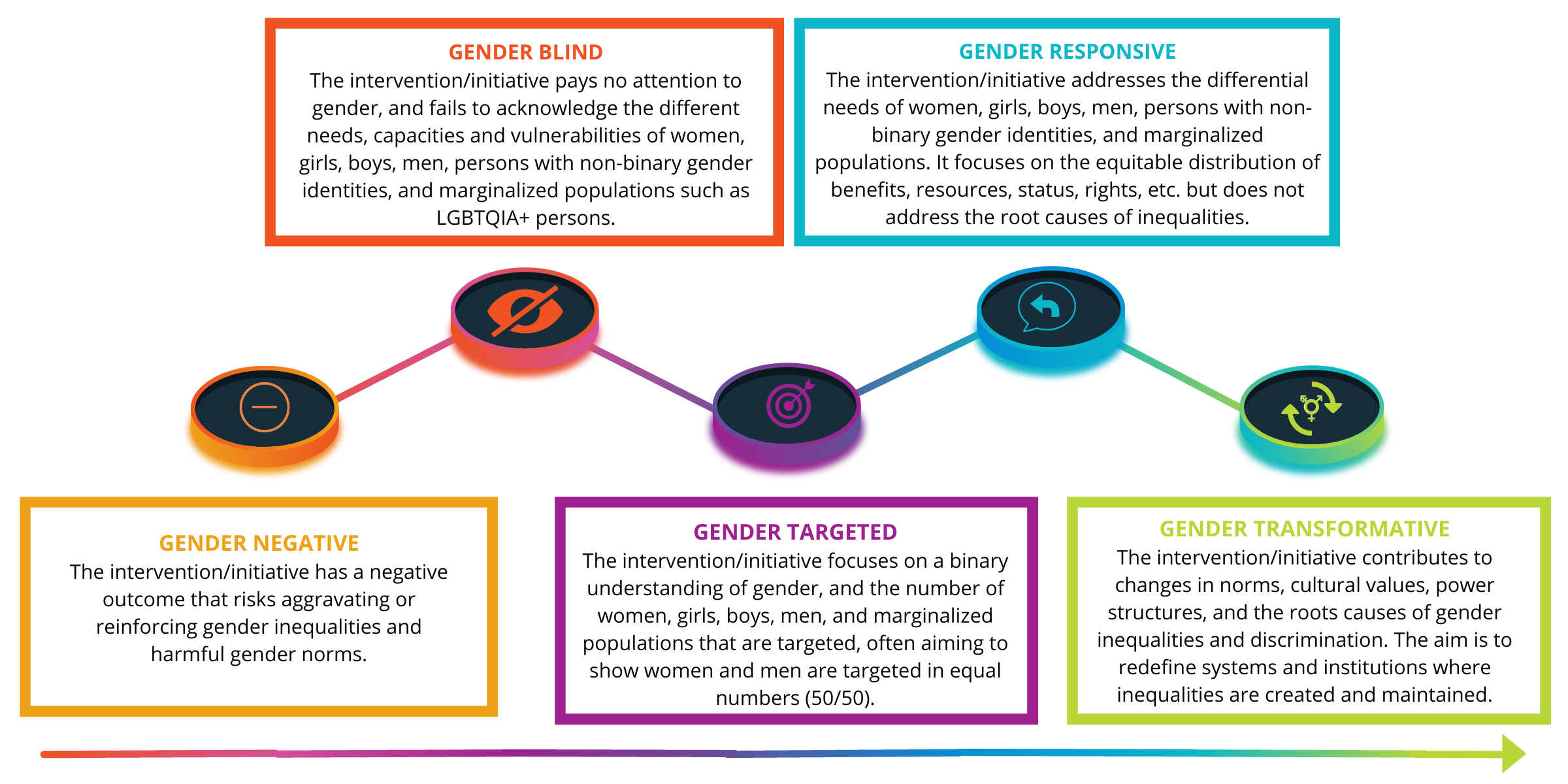
GENDER NEGATIVE: The intervention/initiative has a negative outcome that risks aggravating or reinforcing gender inequalities and harmful gender norms. GENDER BLIND: The intervention/initiative pays no attention to gender, and fails to acknowledge the different needs, capacities and vulnerabilities of women, girls, boys, men, persons with non-binary gender identities, and marginalized populations such as LGBTQIA+ persons.GENDER TARGETED: The intervention/initiative focuses on a binary understanding of gender, and the number of women, girls, boys, men, and marginalized populations that are targeted, often aiming to show women and men are targeted in equal numbers (50/50). GENDER RESPONSIVE: The intervention/initiative addresses the differential needs of women, girls, boys, men, persons with non-binary gender identities, and marginalized populations. It focuses on the equitable distribution of benefits, resources, status, rights, etc. but does not address the root causes of inequalities.GENDER TRANSFORMATIVE: The intervention/initiative contributes to changes in norms, cultural values, power structures, and the roots causes of gender inequalities and discrimination. The aim is to redefine systems and institutions where inequalities are created and maintained.

Adapted from UNDP "Evaluation of UNDP contribution to gender equality and women’s empowerment", 2015, accessible here.


A gender transformative approach recognizes that a gender-equal and socially inclusive approach to disaster risk reduction (DRR) and climate resilience (CR) requires us to change the way we think, and the way we work.

With this series we hope to help you rise to this challenge by providing easily digestible information on the following concepts:
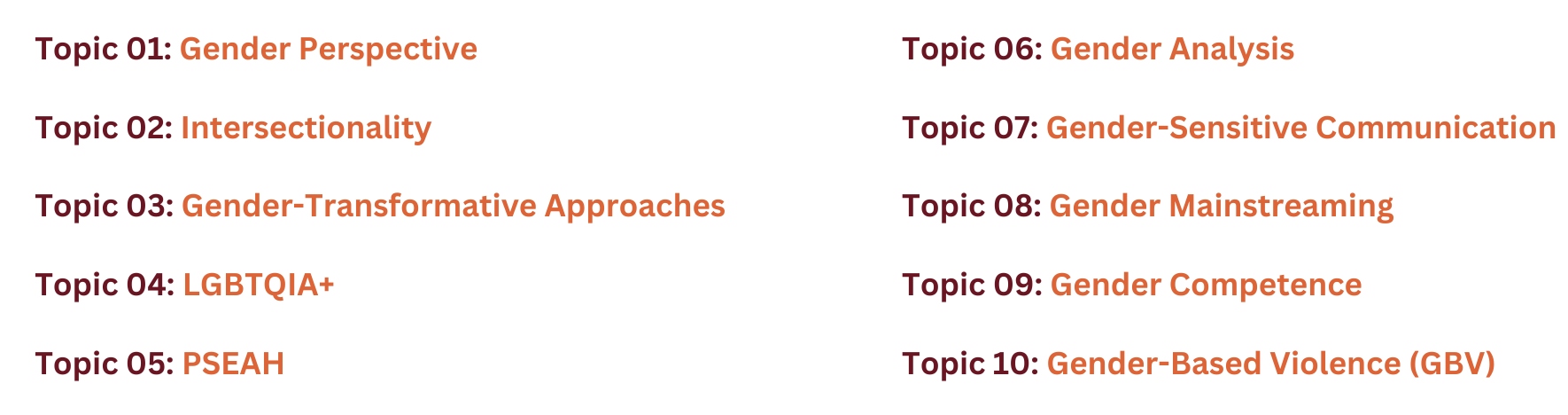

Topic 1: Gender Perspective. Topic 2: Intersectionality. Topic 3: Gender-Transformative Approaches. Topic 4: LGBTQIA+. Topic 5: PSEAH. Topic 6: Gender Analysis. Topic 7: Gender-Sensitive Communication. Topic 8: Gender Mainstreaming. Topic 9: Gender in Recruitment. Topic 10: Gender-Based Violence (GBV)

Treat every initiative as a chance to work towards a more equal world.